A Collection of Tools for Church Planting
The Toolbox
For trainers and strategists pursuing 'No Place Left'
"…from Jerusalem all the way around to Illyricum, I have fully proclaimed the gospel of Christ. …But now that there is no place left for me to work in these regions…"
In about 15 years, Paul reached roughly 25 million people across four regions — Galatia, Asia, Macedonia, and Achaia — and declared the work there finished. Not because every individual believed, but because leaders and churches were in place capable of carrying it forward themselves.
Paul's Pattern
Five Things Paul Did Repeatedly
Acts 14:20-23 (and across his three journeys)
-
1
Enters New Places
Acts 14:20
-
2
Preaches the Gospel
Acts 14:21
-
3
Disciples Believers
Acts 14:22
-
4
Forms Churches
Acts 14:23
-
5
Multiplies Leaders
Acts 14:23
+ See the world Paul moved through
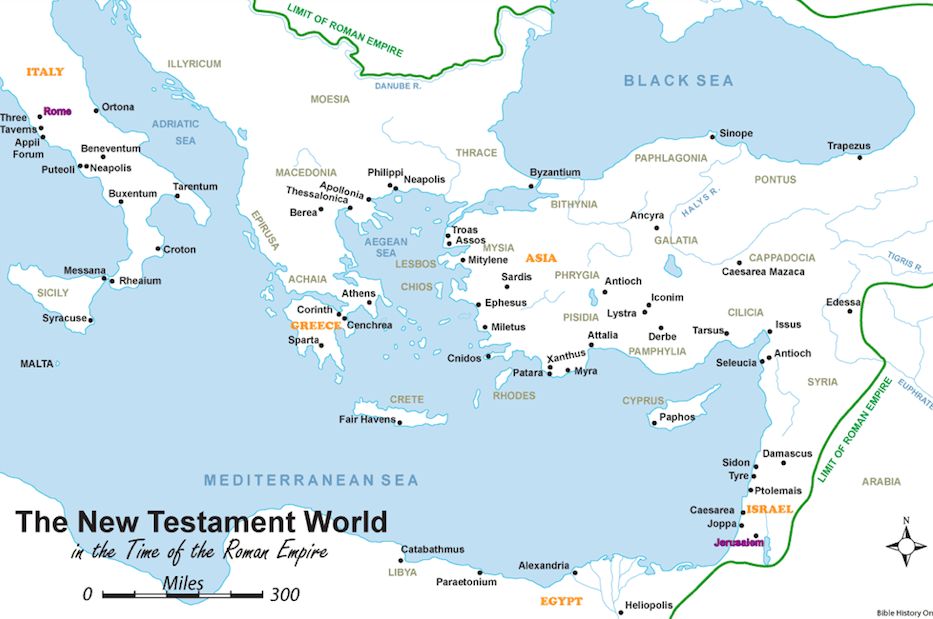
These five things become the framework you'll learn here.
Read one section at a time. Mark each one complete when you're ready to move on.
Kingdom Growth Overview
The map of what you're about to learn. Four "fields" of kingdom growth, with leader development running through the center.

Foundation
God's Vision
Tool A
Glorify Himself
Revelation 7:9-10
Tool B
Save the Lost
Revelation 20:11-15
Field 1
Entry
Tool A
House of Peace
Luke 10:1-11
Tool B
Oikos List/Mapping
Relational network
Field 2
Gospel Sharing
Tool A
My Story
3-part testimony
Tool B
God's Story
Romans Road
Field 3
Discipleship
Tool A
7 Commands
Acts 2:37-47
Tool B
8-Step Process
Discipleship method
Field 4
Healthy Church
Tool A
5 Questions
Who? What? Where? When? Why?
Tool B
5 Essentials
One Head, Two Authorities…
At the Center
Leader Development
Tool A
Prayer & Fasting
Tool B
Qualifications
1 Timothy 3:1-7
Foundation: Abiding in Christ
"I am the vine; you are the branches. Whoever abides in me and I in him, he it is that bears much fruit, for apart from me you can do nothing." — John 15:5
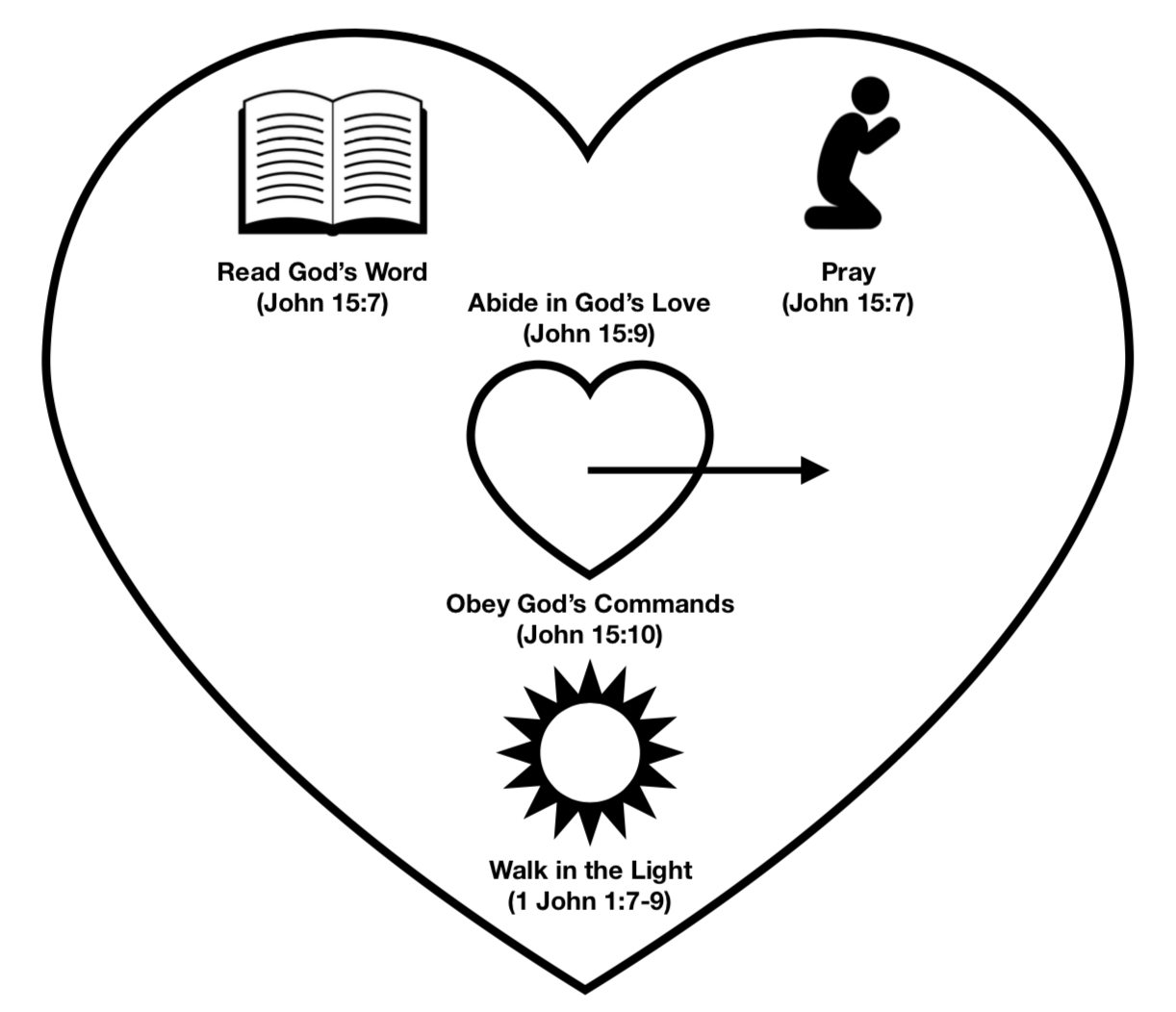
Read / Listen to God's Word
"If you abide in me, and my words abide in you…" — John 15:7
Pray to God
"…ask whatever you wish, and it will be done for you." — John 15:7
Abide in God's Love
"As the Father has loved me, so have I loved you. Abide in my love." — John 15:9
Obey God's Commands
"If you keep my commandments, you will abide in my love…" — John 15:9-10
Walk in the Light
Confess your sin. "If we walk in the light, as he is in the light, we have fellowship with one another…" — 1 John 1:7-9
God's Vision
Why Make Disciples? — Matthew 28:19-20
To Glorify God
Read: Revelation 7:9-10
Ask
- Who is worshipping around Jesus' throne?
- Has the Gospel reached every tribe, tongue, nation, and people?
- How will this happen?
- Whose responsibility is it?
- Why do we go?
Answer
- It is the responsibility of every follower of Christ to take the Gospel to the nations.
- So that a multitude from every tribe, tongue, nation, and people will worship and glorify Jesus.
To Save the Lost
Read: Revelation 20:11-15
Ask
- Who will be judged when Jesus returns?
- Whose names are in the Book of Life?
- Are the names of people living around you in the Book of Life?
- What about those who have never heard about Jesus?
- What will happen to those whose names are not in the Book of Life?
Answer
- All people from the beginning of creation to the end will be judged.
- If they have never believed in Jesus Christ and repented of their sins they will be thrown into the lake of fire for eternity.
Entry
Tool A — Places
House of Peace
Read: Luke 10:1-11
Example: Acts 10:24, 16:33-34
Ask
- What did Jesus tell them to do?
- What did Jesus tell them not to do?
- How can we apply these principles?
Do
Don't Do
Apply
Tool B — People
Oikos List / Mapping
Ask
- Who is in your oikos?
- Who in your life doesn't know Jesus?
- People you live with?
- People you work with?
List your oikos
- 1.
- 2.
- 3.
- 4.
- 5.
Map
How could the Gospel spread through your oikos?
Gospel Sharing
Tool A
My Story — 3 Parts
Read: John 4:4-42
Ask
- How long was the Samaritan woman a believer?
- Was she educated? Was she a man or a woman?
- Was her life perfect?
- Who can share the Gospel?
My life before meeting Christ.
How I met Christ.
My life in Christ.
Tool B
God's Story — 4 Parts
Romans 3:23
All have sinned and fall short of the glory of God.
Romans 6:23
The wages of sin is death, but the gift of God is eternal life in Christ Jesus our Lord.
Romans 5:8
While we were still sinners, Christ died for us.
Romans 10:9
If you declare with your mouth "Jesus is Lord" and believe in your heart that God raised him from the dead, you will be saved.
The Bridge Question
"Do you want to believe in Jesus?"
The Seven Stories of Hope
Use with those not yet ready to repent but willing to meet again. Click a story to read the full script. After telling it, use the Sword method questions below.
1
Hope for the Rejected
The Sinful Woman — Luke 7:36-50
Audio
+
Hope for the Rejected
The Sinful Woman — Luke 7:36-50
Listen to the Story
Story Script — read aloud or tell in your own words
One day, a Pharisee named Simon invited Jesus to his home for dinner. Simon was a religious leader — respected, educated, careful about every point of the law. He wanted to observe Jesus up close.
While they were eating, a woman slipped in from the street. In that culture, guests reclined on low couches with their feet stretched behind them, and townspeople could walk through to observe — so her being there was not unusual. But she was. The whole city knew her by reputation. She was a sinful woman.
She stood behind Jesus and began to weep. Her tears fell onto his feet. She knelt down, wiped them with her own hair, then kissed his feet over and over. She had brought an alabaster jar of expensive perfume, and she poured it out over his feet.
Simon watched all of this and thought to himself: "If this man were truly a prophet, he would know what kind of woman is touching him. He would never let her near him."
Jesus turned to Simon. "I have something to tell you."
"Tell me, teacher," Simon replied.
"Two men owed money to the same moneylender. One owed five hundred denarii. The other owed fifty. Neither could pay him back, so he cancelled both debts. Which of them will love him more?"
Simon answered carefully. "I suppose the one who had the larger debt cancelled."
"You are right," Jesus said. Then he looked toward the woman and said to Simon: "Do you see this woman? When I came into your house, you gave me no water for my feet — but she has wet them with her tears and wiped them with her hair. You gave me no greeting — but she has not stopped kissing my feet since I arrived. You put no oil on my head — but she has poured perfume on my feet."
Then Jesus said quietly: "Her many sins have been forgiven — and her great love shows it. But whoever has been forgiven little loves little."
He turned to the woman and said simply: "Your sins are forgiven."
The other guests began murmuring to each other: "Who is this who even forgives sins?"
Jesus said to her: "Your faith has saved you. Go in peace."
2
Hope for the Non-Religious
The Pharisee & Tax Collector — Luke 18:9-17
Audio
+
Hope for the Non-Religious
The Pharisee & Tax Collector — Luke 18:9-17
Listen to the Story
Story Script — read aloud or tell in your own words
Jesus told this story to people who were proud of their own righteousness and who looked down on everyone else.
Two men went to the temple to pray. One was a Pharisee — a man who had dedicated his life to knowing and keeping the law of God. He knew scripture deeply, he was disciplined, and he was admired for it. The other was a tax collector. In that time and place, tax collectors were despised. They worked for the Roman occupiers, and many of them skimmed money from their own people. No one of good standing would share a meal with them.
The Pharisee stood up and began to pray about himself: "God, I thank you that I am not like other people — robbers, evildoers, adulterers — or even like that tax collector over there. I fast twice a week and give a tenth of everything I earn."
He was not lying. Everything he said was probably true.
The tax collector stood far off at the back. He could not even bring himself to look up toward heaven. He beat his chest — a gesture of deep grief and shame — and said quietly: "God, have mercy on me. I am a sinner."
Jesus looked at his listeners and said: "I tell you, this man — the tax collector — went home right with God. The other one did not."
Then he said: "Everyone who lifts himself up will be brought low, and everyone who humbles himself will be lifted up."
3
Hope Comes from God
Paul in Athens — Acts 17:22-31
Audio
+
Hope Comes from God
Paul in Athens — Acts 17:22-31
Listen to the Story
Story Script — read aloud or tell in your own words
Paul arrived in Athens ahead of his friends and was waiting for them. As he walked through the city, he was troubled by what he saw — the city was full of idols, shrines to every god imaginable. So he started talking. He spoke in the synagogue and in the marketplace with whoever would engage him.
Some Greek philosophers — Epicureans and Stoics — brought him to the Areopagus, the open-air place where Athens debated ideas publicly. They called him a "babbler," someone picking up scraps of foreign thinking. But they were curious: what was this new teaching?
Paul stood before them and said:
"People of Athens, I can see that in every way you are very religious. As I walked through your city and looked at the things you worship, I even found an altar with this inscription: TO AN UNKNOWN GOD. What you worship without knowing — that is what I am telling you about.
"The God who made the world and everything in it is the Lord of heaven and earth. He does not live in temples built by human hands, and he is not served by human hands as though he needs anything — because he himself gives life and breath and everything to everyone.
"From one man he made all the nations of the earth to live across the whole world. He set the times and the places where people would live — and the reason he did this was so that people would seek him, and perhaps reach out for him and find him, though he is not far from any one of us. For in him we live and move and have our being. As some of your own poets have said: 'We are his offspring.'
"Since we are God's offspring, we should not imagine that the divine is like gold or silver or stone — something shaped by human hands and human ideas.
"In the past, God was patient with this kind of ignorance. But now he commands all people everywhere to repent. Because he has set a day when he will judge the whole world with justice — through a man he has appointed. And he has given proof of this to everyone: he raised that man from the dead."
4
Hope Forgives
The Unforgiving Servant — Matthew 18:21-35
Audio
+
Hope Forgives
The Unforgiving Servant — Matthew 18:21-35
Listen to the Story
Story Script — read aloud or tell in your own words
Peter came to Jesus and asked: "Lord, how many times should I forgive someone who wrongs me? Up to seven times?"
Jesus said: "Not seven times — but seventy-seven times."
Then he told this story.
A king decided it was time to settle accounts with the men who served him. One man was brought before him who owed an enormous sum — ten thousand talents. It was more money than a laborer could earn in several lifetimes. There was simply no way to pay it back.
The king ordered the man to be sold, along with his wife, his children, and everything he owned, as partial repayment.
The man fell on his knees before the king. "Have patience with me," he begged. "I will pay back everything."
The king looked at him. He was moved with pity. And he did something extraordinary — he cancelled the entire debt and let the man go free.
That same man walked out and found one of his fellow servants who owed him a hundred denarii — a few weeks' wages. He grabbed him by the throat and demanded: "Pay back what you owe me."
His fellow servant fell to his knees and begged with the exact same words: "Have patience with me. I will pay you back."
The man refused. He had him thrown into prison until the debt could be paid.
The other servants saw what happened and were sick with grief. They reported the whole thing to the king.
The king summoned the man. "You wicked servant," he said. "I cancelled all of that debt because you begged me to. Should you not have had mercy on your fellow servant, just as I had mercy on you?"
In anger, the king handed him over to be punished until he repaid everything he owed.
Then Jesus said to his listeners: "This is how my heavenly Father will treat each of you unless you forgive your brother or sister from your heart."
5
Hope Through Death
The Criminal on the Cross — Luke 23:32-43
Audio
+
Hope Through Death
The Criminal on the Cross — Luke 23:32-43
Listen to the Story
Story Script — read aloud or tell in your own words
After Jesus was arrested, he was brought before the religious leaders, then to Pilate the Roman governor, then to Herod, then back to Pilate again. Three times Pilate said he found no reason to execute him. But the crowd kept demanding it, and Pilate finally gave them what they wanted.
They led Jesus out to be crucified alongside two criminals.
When they reached the place called the Skull, they crucified all three of them — Jesus in the middle, one criminal on his right, one on his left.
As he was dying, Jesus said: "Father, forgive them. They do not know what they are doing."
The soldiers cast lots for his clothing. The religious rulers stood watching and sneering. "He saved others — let him save himself if he is the Messiah, the Chosen One."
One of the criminals hanging beside him joined in the mockery: "Aren't you the Messiah? Save yourself and us!"
But the other criminal rebuked him. "Don't you even fear God? You're under the same sentence. And we deserve it — we're getting what our deeds deserve. But this man has done nothing wrong."
Then he turned and said: "Jesus, remember me when you come into your kingdom."
Jesus answered him: "Truly I tell you — today you will be with me in paradise."
This man had nothing left. No time to be baptized. No time to learn theology. No record of good works. He only had a dying moment and a simple plea — and it was enough.
6
Hope Rose from the Dead
The Resurrection — Luke 24:1-35
Audio
+
Hope Rose from the Dead
The Resurrection — Luke 24:1-35
Listen to the Story
Story Script — read aloud or tell in your own words
Three days after Jesus was crucified and buried, very early on the first day of the week, a group of women came to the tomb. They had prepared spices to anoint his body.
When they arrived, the stone that had been rolled across the entrance was pushed aside. They went in — but the body of Jesus was not there.
While they stood there, confused and frightened, two men in dazzling clothes suddenly appeared beside them. The women bowed their faces to the ground.
The men said: "Why do you look for the living among the dead? He is not here. He has risen! Remember what he told you, back in Galilee — that the Son of Man must be handed over to sinners, be crucified, and on the third day rise again."
The women remembered. They left the tomb and ran to tell the eleven disciples and everyone else. But when the disciples heard it, it seemed like nonsense. They did not believe the women.
Peter got up and ran to the tomb anyway. He bent down and looked inside. He saw the burial cloths lying there, with nothing in them. He went home full of wonder, not knowing what to make of it.
That same day, two of Jesus' followers were walking from Jerusalem to a village called Emmaus, about seven miles away. They were going over everything that had happened. As they walked, a stranger came alongside them. It was Jesus — but they did not recognize him.
"What are you discussing?" he asked.
They stopped, their faces heavy with grief. One of them, Cleopas, answered: "Are you the only person in Jerusalem who doesn't know what has happened here these past few days?"
"What things?" the stranger asked.
"About Jesus of Nazareth," they said. "He was a prophet — powerful in word and deed before God and all the people. Our chief priests and rulers handed him over and had him crucified. We had hoped he was the one who was going to redeem Israel. And now it is the third day. Some of the women went to the tomb this morning — they found it empty and said they had seen a vision of angels who told them he was alive."
The stranger began speaking, explaining from the scriptures everything written about the Messiah — that he had to suffer before entering his glory.
When they reached Emmaus, he continued on as if to keep walking. But they urged him: "Stay with us. It's getting late." So he came in with them.
When they sat down to eat, he took bread, gave thanks, broke it, and handed it to them. In that moment, their eyes were opened. They recognized him.
And he vanished from their sight.
They looked at each other. "Didn't our hearts burn within us while he was talking to us on the road?"
They got up immediately, walked back seven miles to Jerusalem in the dark, and found the eleven disciples gathered together. Before they could say anything, the disciples said: "It's true. The Lord has risen!"
7
Hope is Waiting for You
The Prodigal Son — Luke 15:11-32
Audio
+
Hope is Waiting for You
The Prodigal Son — Luke 15:11-32
Listen to the Story
Story Script — read aloud or tell in your own words
A man had two sons. One day the younger son came to his father and said: "Father, give me my share of the estate now."
In that culture, this was a profound insult — as if to say: you are already dead to me. I want what I will eventually get from you, and I want it today. But the father divided his property between both sons and gave it to him.
A few days later, the younger son packed everything and left for a distant country. He had money and freedom, and he used both without any thought for tomorrow. He wasted everything on reckless living. And when the money was gone, a severe famine hit the region. He had nothing.
He found work with a local man who sent him out to the fields to feed pigs. He was so hungry that he looked at the pods he was throwing to the pigs and thought about eating them himself. No one gave him anything.
Finally, he came to his senses.
"How many of my father's hired servants have more food than they can eat, and here I am starving to death? I will get up and go back to my father. I will say to him: 'Father, I have sinned against heaven and against you. I am no longer worthy to be called your son. Make me like one of your hired servants.'"
So he got up and made the long walk home.
While he was still a long way off, his father saw him. And he did not wait. He ran.
He threw his arms around his son and kissed him.
The son began his rehearsed speech: "Father, I have sinned against heaven and against you. I am no longer worthy to be called your son—"
His father turned and called to the servants: "Bring the best robe — quickly — and put it on him. Put a ring on his finger and sandals on his feet. Bring the fattened calf and kill it. Let's celebrate! Because this son of mine was dead and is alive again. He was lost and is found."
And the celebration began.
The older son was out in the field. As he came back toward the house, he heard the music and dancing. He called a servant over and asked what was going on. "Your brother has come home," the servant said. "Your father has killed the fattened calf because he has him back safe and sound."
The older son was furious. He refused to go inside.
His father came out and pleaded with him.
"Look," the older son said. "All these years I have worked for you and never once disobeyed you. You never even gave me a small goat so I could celebrate with my friends. But when this son of yours comes back — the one who wasted your money on shameful living — you kill the fattened calf for him."
The father answered him gently: "Son, you are always with me, and everything I have is yours. But we had to celebrate and be glad, because your brother was dead and is alive again. He was lost — and now he is found."
Sword Bible Study Method
Ask these four questions after telling any story.
God?
What does this passage say about God?
Example / Command?
Is there an example to follow or a command to obey?
Sin?
Is there a sin to confess or avoid?
Man?
What does this say about mankind?
Discipleship
Tool A
7 Commands of Christ
Tool B
8-Step Meeting Process
9-Week Discipleship Schedule
A reproducible nine-week curriculum that walks a new disciple through the 7 Commands and ends with what a healthy church looks like. Simple enough that they can turn around and use it with the person they disciple.
-
1
God's Story
Romans Road — Rom 3:23, 6:23, 5:8, 10:9-10
-
2
Command 1 — Repent & Believe
Luke 19:1-10
-
3
Command 2 — Be Baptized
Acts 8:26-39
-
4
Command 3 — Lord's Supper
Luke 22:7-20
-
5
Command 4 — Pray
Matthew 6:5-15
-
6
Command 5 — Love
Luke 10:25-37
-
7
Command 6 — Give
Mark 12:41-44
-
8
Command 7 — Go & Make Disciples
Matthew 28:18-20
-
9
Healthy Church
Acts 2:37-47 — what does the church do together?
Healthy Church
When believers gather and commit to following Christ together, what makes that gathering an actual church — and a healthy one that can multiply? Two tools answer that.
Tool A
5 Questions — What is a Church?
Who is the church?
Those who accept the Gospel, are baptized, and identify as a local body. (Acts 2:41)
What does the church do?
The 7 Commands — repent, baptize, Lord's Supper, pray, love, give, go. (Acts 2:37-47)
Where does the church meet?
In houses. (Acts 2:46, 5:42, Rom 16:5)
When does the church meet?
Day by day, regularly. (Acts 2:46, Heb 10:24-25)
Why does the church meet?
To glorify God and make disciples. (Hab 2:14, Matt 28:18-20)
Tool B
5 Essentials of a Healthy Church
One
Head
Jesus Christ — Ephesians 1:22-23
Two
Authorities
God's Word (2 Tim 3:16) and the Holy Spirit (John 14:26)
Three
Roles
Elders/Shepherds (1 Tim 3:1-7) · Deacons (Acts 6, 1 Tim 3:8-13) · Priesthood of all believers (1 Pet 2:9-10)
Four
Signs of Health
Self-supporting · Self-governing · Self-reproducing · Self-correcting
Five
Functions
Worship · Fellowship · Discipleship · Service · Evangelism
Leader Development
At the center of the Four Fields. Without leaders being formed, the fields don't multiply.
Tool A
Prayer & Fasting
Read: Luke 6:12-13 · Acts 13:1-3 · Acts 14:23
Ask
- What did Jesus do before choosing the Twelve?
- What did the Antioch church do before sending out Paul and Barnabas?
- What did Paul and Barnabas do when appointing elders in every church?
- What pattern do you see for identifying and releasing leaders?
Apply
Don't appoint leaders by gifting or availability alone. Pray and fast — wait on the Spirit's confirmation before commissioning anyone.
Tool B
Qualifications
Read: 1 Timothy 3:1-7
Developmental Progression
Five Levels of Leadership
Everyone learns by training others — the levels describe who someone is becoming, not a permanent rank.

Level 1
Seed Sower
Sustains by…
- Sharing the gospel in obedience
- Reaching their own oikos
- Modeling evangelism for others
- Displaying love for lost people
Next step
Train them in Field 3. Teach a simple Bible study process. Impart DNA that encourages reproduction.
Level 2
Church Planter
Sustains by…
- Modeling evangelism among strangers
- Facilitating discipleship groups
- Encouraging healthy church functions
- Identifying local leadership (1 Tim 3)
- Mentoring emerging leaders
Next step
Guide them in leader selection. Encourage releasing authority. Expose them to multiplication.
Level 3
Church Multiplier
Sustains by…
- Recognizing and releasing authority
- Equipping and sending others
- Casting vision for 2nd, 3rd, 4th generation growth
- Delegating responsibility
- Vision beyond personal ability
Next step
Expose to other fields. Help see gaps and fruitful tools. Guide responsibility globally. Encourage time with other multipliers.
Level 4
Trainer
Sustains by…
- Not "owning" the fruit
- Training leaders in previous levels
- Diagnosing network strengths/weaknesses
- Bringing biblical solutions to barriers
- Casting vision in other networks
Next step
Cultivate burden for unengaged peoples. Encourage increased prayer. Help deepen strategic focus. Develop vision of no place left.
Level 5
Strategist
Sustains by…
- Focusing on specific unreached segments
- Mobilizing networks and resources
- Training and developing all levels of leadership
- Cross-pollinating multiple networks
- Pursuing no place left
Next step
Organize cross-cultural sending networks. Encourage development of more strategists. Prepare exit strategy. Foster pursuit of no place left where Jesus isn't yet preached.
Which level are you in right now? Who are you training to grow into the next level?
60-90 Day Discipleship Guide
A practical, reproducible commitment between you and a small number of leaders ("your Timothys"). Simple, consistent, and built to be passed on.
The Commitment
- Mutually commit to spend 60-90 days a year with a small number of leaders faithful to implement this training.
- This can be training together, traveling together, time in your home or theirs, or scheduled discipleship meetings.
- What matters is intentional investment and accountability — not the format.
- Your "Timothys" are expected to have this same kind of relationship with the leaders they are discipling.
- Whatever format you choose: simple, reproducible, consistent. Constant change breaks the discipleship chain.
Meeting Structure
Three Parts
Part 1
Accountability
Open with the seven reproducible questions (right).
Part 2
Devotional & New Concept
Read a Bible passage, ask Sword Method questions, then teach (or review) one concept/tool. Practice it together so it will reproduce.
Part 3
Goal Setting
Set goals to apply the teaching. Take time for reflection. Pray for God to empower the goals for His Kingdom.
Reproducible
Seven Accountability Questions
-
1How are you loving your family?
-
2What sins are you struggling with?
-
3What are you reading in God's Word? What are you learning?
-
4Who are you discipling? How is it going? Are you asking them these questions?
-
5Who have you shared the Gospel with since our last meeting?
-
6Who have you trained?
-
7How can I pray for you?
Generational Tracking
Watch the multiplication happen. Each church plants the next. Each leader trains the next.
Your commitments
Who you said you'd train
Your downline
Loading…
Every person you've trained, and every person they've trained, down through the generations. This is what "no place left" looks like, made visible.
Your downline is empty — no one has joined your cohort yet.
Sign in to see yours
Your live downline
Sign in with Google to track every cohort member you've invited, and the cohort members they've invited, down through the generations.
An example from the field
Example
Healthy Church Generational Tracking
A snapshot from the field — multiple generations of multiplication from one trainer.
7
attend: 50
baptized: 35
Gen 1
Delhi · Rakesh
7
attend: 25
baptized: 15
Gen 2
Shimla · Ajay
7
attend: 20
baptized: 13
Gen 2
Kullu · Rajesh
7
13/5
Gen 3
Manali · Deepak
7
15/7
Gen 3
Kangra · Sanjay
7
13/5
Gen 4
Chamba · Raju
2/7
6/2
Gen 4 (group)
Mandi · Sanjay
Confessions
A reproducible methodology for an emerging church to build its own statement of belief on core doctrines — by studying Scripture together, not by handing them a finished document.
How to Lead a Confessions Session
- 1
Introduce
Briefly introduce the doctrine for the day.
- 2
Ask
What are common questions or misconceptions about this topic?
- 3
List
Write down every question (good or bad).
- 4
Discuss & Confirm
Pick the 5-6 most important questions to focus on.
- 5
Instruct
Break into groups. Each group reads the passages aloud and answers their assigned questions, citing verses.
- 6
Present
Each group presents. The whole group confirms or debates until each answer is owned by all.
- 7
Facilitate
Together write a statement they can take back to their churches. Compare to an established confession (like the BFM) for completeness — but don't show it during the writing.
- 8
Suggestions for the Trainer
Facilitate — don't teach! Guide toward quality questions. Step in only to point to verses that keep them on track.
God the Father
Sample passages
Gen 1:1, 2:7 · Ex 3:14, 6:2-3 · Deut 6:4 · Ps 19:1-3 · Isa 43:3,15 · Matt 6:9ff, 28:19 · John 4:24, 14:6-13 · Rom 8:14-15 · Eph 4:6 · 1 Tim 1:17 · 1 John 5:7
God the Son
Sample passages
Isa 7:14, 53 · Matt 1:18-23, 3:17, 16:27, 28:1-6 · Mark 1:1 · Luke 1:35 · John 1:1-18, 14:7-11 · Acts 1:9, 2:22-24 · Rom 1:3-4, 3:23-26, 5:6-21 · 1 Cor 15:1-8 · Phil 2:5-11 · Heb 1:1-3, 4:14-15 · 1 John 1:7-9
God the Holy Spirit
Sample passages
Gen 1:2 · Ps 51:11, 139:7ff · Isa 61:1-3 · Joel 2:28-32 · Matt 3:16 · John 4:24, 14:16-17, 16:7-14 · Acts 1:8, 2:1-4, 38 · Rom 8:9-11, 14-16, 26-27 · 1 Cor 2:10-14, 3:16 · Gal 4:6 · Eph 1:13-14 · 2 Tim 1:14 · Heb 9:8,14 · Rev 1:10, 22:17
Mankind
Sample passages
Gen 1:26-30, 2:5,7,18-22, 3, 9:6 · Ps 1, 8:3-6, 32:1-5, 51:5 · Isa 6:5 · Jer 17:5 · Matt 16:26 · Acts 17:26-31 · Rom 1:19-32, 3:10-18, 23, 5:6,12,19, 6:6, 7:14-25, 8:14-18, 29 · 1 Cor 1:21-31, 15:19-22 · Eph 2:1-22 · Col 1:21-22, 3:9-11
For comparison after your group has drafted its statement, see the Baptist Faith & Message as one established example.
Foundations — OT/NT Survey
Deeper training for emerging church leaders: learn the timeline of Scripture by applying a hermeneutic to 35 stories. The goal is that leaders return home with sermon-ready material — and the habit of interpreting Scripture rightly.
The Story Arc
1600 BC
Beginnings
800 BC
Deliverance
0
Kings & Prophets
33 AD
Jesus' Life
Today
Jesus' Followers
Step 1
What does this passage say?
- What does it say about God?
- What does it say about Man?
- What does it say about Sin?
- Is there an example or command for us?
Step 2
What does this passage teach?
- Which genre is this passage?
- What is the main idea?
- What are the supporting sub-points?
Step 3
What do we do?
- How did this apply then?
- How does it apply to us now?
- What are action steps for our church?
The 35-Story Curriculum
5 eras · 7 stories each
+
Beginnings
- Creation (Gen 1-2)
- Fall (Gen 3)
- Abraham's Call (Gen 12:1-7, 15:1-6)
- God's Promise (Gen 18:1-16, 20:1-20)
- Promise Fulfilled (Gen 21:1-7)
- Sacrifice of Isaac (Gen 22:1-19)
- Joseph & Imprisonment (Gen 25, 37, 39)
Deliverance
- Joseph Interprets Dreams
- Joseph: Drought & Family (Gen 41-43)
- God Promises Deliverance (Ex 6:1-13)
- The Passover (Ex 12:1-28)
- Israel Delivered (Ex 12:33-51)
- Day of Atonement (Lev 16:1-10)
Kings & Prophets
- David is King (1 Sam 16, 2 Sam 5,7)
- David & Bathsheba (2 Sam 11)
- David Laments (Ps 22:1-31)
- Nathan's Story (2 Sam 12:1-24)
- Elijah (1 Kings 4, 11-33, 16-17, 18)
- Promise of Coming King (Isa 9:6-7, 53:2-11)
Jesus' Life
- Jesus' Birth (Matt 1, Luke 2)
- Jesus' Baptism (Luke 3:2-22)
- Possessed Man (Mark 5:1-20)
- Parable of the Lost Son (Luke 15)
- Arrest & Trial (Matt 26-27)
- Crucifixion (Luke 23:32-56)
- Resurrection (Luke 24)
- Promise & Ascension (Acts 1:1-11)
Jesus' Followers
- Pentecost (Acts 2:1-47)
- Saul's Conversion (Acts 9:1-18)
- Peter & Cornelius (Acts 10)
- Sent Ones (Acts 13:1-3, 14:19-28)
- Paul in Athens (Acts 17:16-34)
- Life in the Spirit (Rom 8:1-11)
- Christ's Example (Phil 2:1-11)
- Christ's Return (Rev 7, 19-20)
Principles for Interpreting by Genre
10 genres
+
Story
God is the hero. All men are sinners. What happens isn't always what should happen.
Law
For Jews only? For everyone? Mentioned in the New Testament?
Poetry
Look for repeats, increases, opposites. Ask: what's the purpose? Is it a symbol or overstatement?
Wisdom
General principles, not promises. The Bible provides balance. Context is critical.
Prophecy
A prophet is God's spokesperson. What did the original audience think? Has it been fulfilled?
Gospel
Is the story in other Gospels? What does it teach about Jesus? About following Him?
Parables
Symbolic, not literal. Focus on the main point. If Jesus explains, no further interpretation needed.
Acts
Examples for church and ministry. Is it an example or command? Is the example a recurring trend?
Letter
Situational. Only one side of a conversation. Look for main themes. How did the original hearers understand it?
Revelation
Symbolic and difficult. Jesus has triumphed. Jesus is coming back. Encourages perseverance.